Cambridge International School
A registered and accredited Cambridge International School. Our IGCSE programme is administered and regulated by Cambridge Assessment International Education, which sets the syllabus, the papers and the grading.
From the Early Years Foundation Stage through to A Levels, taught in one continuous structure so nothing has to be relearned when a child moves up.
Accredited and partnered
The curriculum
The National Curriculum in England is used by the vast majority of schools in England and Wales and by thousands of British curriculum schools around the world, more than thirty thousand schools in total. It was first launched in 1988 and has developed consistently since, so it is both well established and well understood.
It is usually described as broad and balanced. Up to the age of fourteen, students study the full range of subjects needed to develop into well rounded people. The curriculum holds exceptionally high academic standards while remaining genuinely current, making sure students also build the wider life skills that matter for university applications and for everything after.
Accreditations and partnerships
Three independent bodies, each doing a different job. Worth understanding the difference, because schools often blur them.
A registered and accredited Cambridge International School. Our IGCSE programme is administered and regulated by Cambridge Assessment International Education, which sets the syllabus, the papers and the grading.
An official Pearson International School and an Edexcel partner centre. This covers our A Levels and a share of our IGCSE entries, and it is why students can sit papers from two boards rather than one.
A member of the British Council Partner Schools Global Network, which connects the school to professional development, international projects and access to examination centres worldwide.
An accredited AKU-EB school, which gives families a nationally recognised route alongside the international boards. Admissions on the AKU-EB stream open in January 2027.
Certificates and registration numbers are available from the school office on request.
Key stages
Each stage has its own job. Together they form a single pathway rather than a series of restarts.
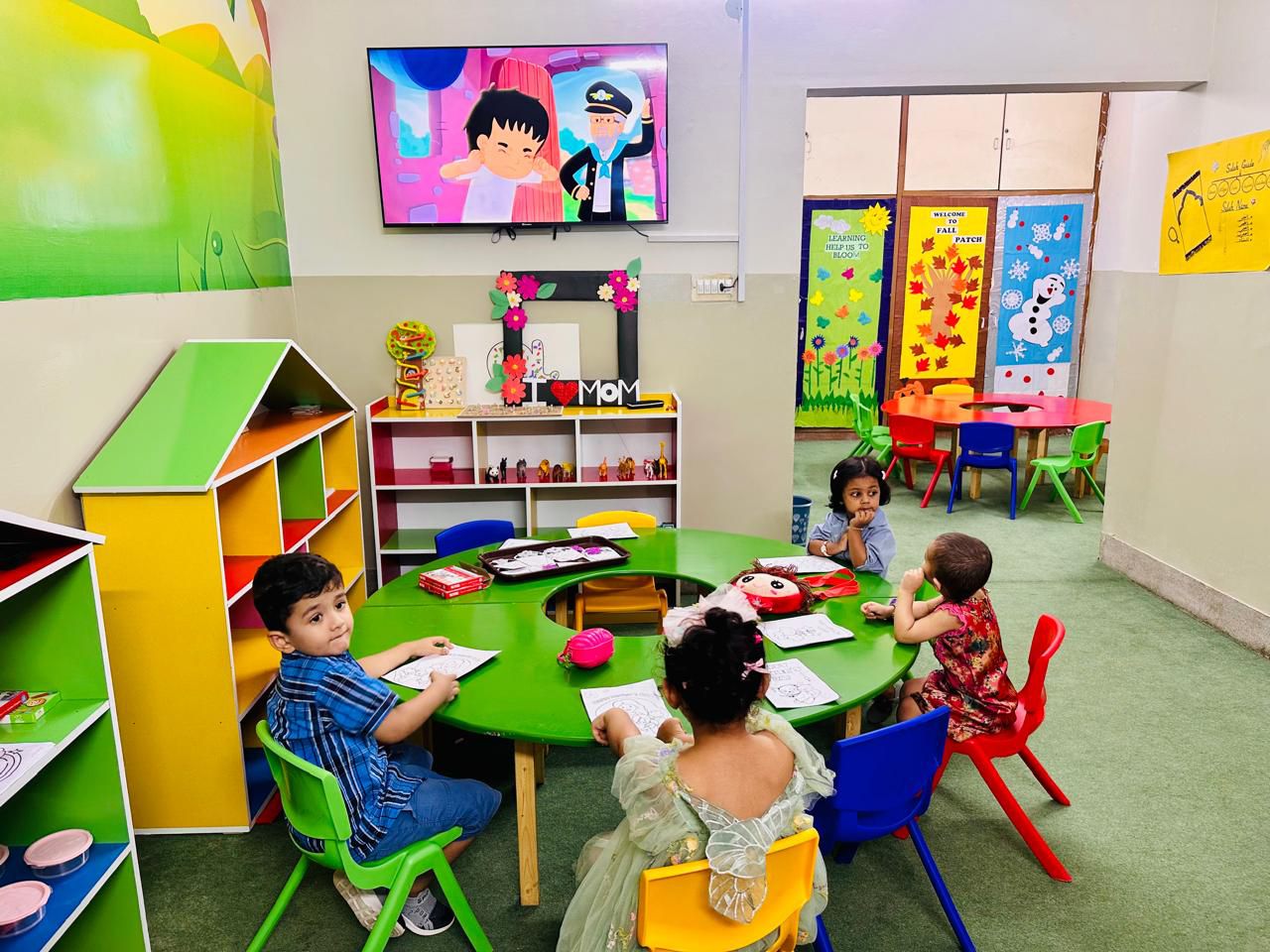
Play based and holistic. Children work on early literacy and numeracy, motor skills and social and emotional growth, through poems, stories, art and play. A structured but imaginative setting, where the aim is confidence and communication as much as academics.
The earliest experiences shape learning habits and a child's sense of self, so this stage is staffed and planned accordingly.
A deliberate transition from early learning into structured academics. The emphasis falls on reading fluency, foundational numeracy and the social skills of a classroom, in an environment that still prioritises warmth and encouragement.
Learning becomes more focused and more enriched. Students go deeper into subjects, build stronger reasoning and communication, and start to work independently. Project based learning and interactive discussion carry a lot of the weight here.
The bridge into specialised study. Mathematics, English, Science, History, Geography, Global Perspectives and ICT, taught by subject specialists who push students to ask questions rather than collect answers.
By the end of it a student should have academic maturity and time management, not just a syllabus covered.
KS4
Years 10 and 11. The IGCSE is the world's most widely taken qualification for 14 to 16 year olds, recognised by leading institutions across more than 160 countries.
We enter students with two boards rather than one, which is unusual and is the single biggest academic advantage we offer.
See the subject structureKS5
Years 12 and 13, delivered through The Vantage Online School as an official Edexcel partner centre. AS Level in Year 12 builds the foundations, A2 in Year 13 takes them to depth.
Students choose a minimum of three subjects, aligned to the degree they intend to read.
See the A Level pathwaysKey Stage 4
Two compulsory core subjects, then a minimum of three electives chosen to build genuine specialisation rather than a scattered set of passes.
English Language and Mathematics. Every student takes both.
Physics, Chemistry and Biology, taken singly or in combination depending on the pathway ahead.
Computer Science and Information and Communication Technology.
Accounting, Business Studies and Economics, for students aiming at business degrees. Islamic Studies is also offered.
Subject availability varies between chapters and the Online School, and is confirmed with your offer. The full published list for the Online School is on the Online School page.
The dual board advantage
Most schools pick a board and enter every student for everything with it. We assign each subject to the board whose mark scheme gives our students the better outcome.
Academic rigour, globally benchmarked, research oriented assessment. The board most people mean when they say IGCSE.
Flexibility, applied learning and the broadest subject range available. Its criteria referenced mark schemes reward well prepared students consistently, particularly in Business, Economics and the Sciences.
160+
Countries where IGCSE qualifications are recognised, including the UK, USA, Canada, Australia and the GCC.
02
Examination boards under one roof, assigned subject by subject rather than school wide.
03
Minimum electives alongside the two compulsory core subjects.
Mixing boards subject by subject is standard practice at leading independent schools internationally. Universities weigh both identically, so there is no trade off, only a choice most schools do not offer.
How teaching is organised
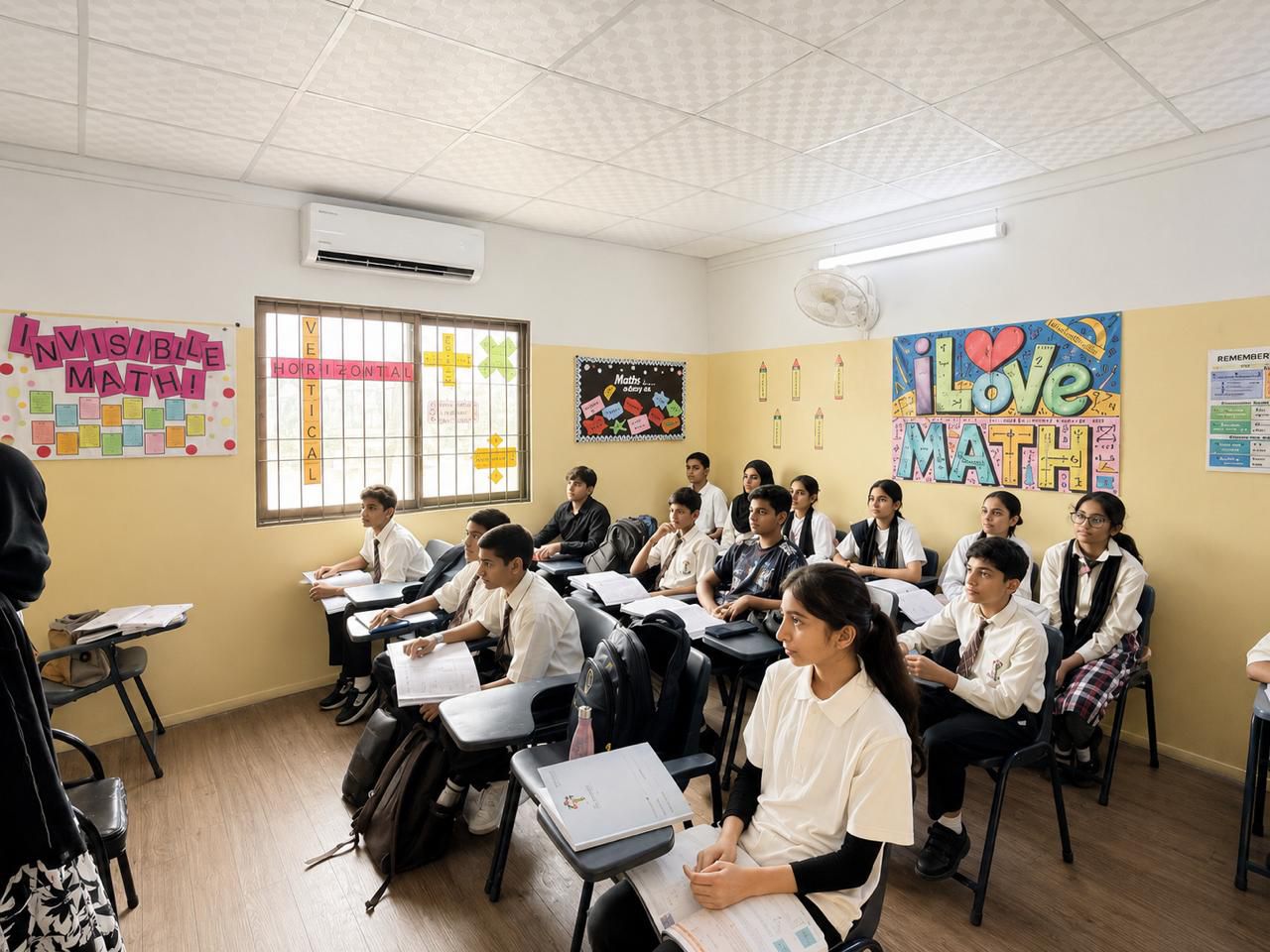
Most schools give each year group a room and send teachers to it. We do the opposite. Rooms belong to subjects, and students move between them on a timetable, the way a university runs.
It means a mathematics room is set up for mathematics all day, by the person who teaches it: the right displays on the walls, the right equipment to hand, and a teacher working in their own space rather than borrowing somebody else's for forty minutes.
It also asks something of the students. Moving between rooms on your own schedule builds the independence and time management that Key Stage 4 and A Levels take for granted, and it starts years before they need it.
Academic philosophy
The Vantage runs a structured and balanced curriculum strategy, with personalised support built on top of it. The order matters. Personalisation without structure is improvisation, and children can feel the difference.
We believe every child is entitled to a learning experience shaped to their own needs and their own pace. In practice that means assessment that informs the next lesson rather than merely ranking a year group.
No two children are born alike. As a school we respect and recognise the different needs, interests and strengths of each student, and we encourage them intellectually, socially and emotionally to reach their full academic and personal potential.
Assessment
Beyond the timetable
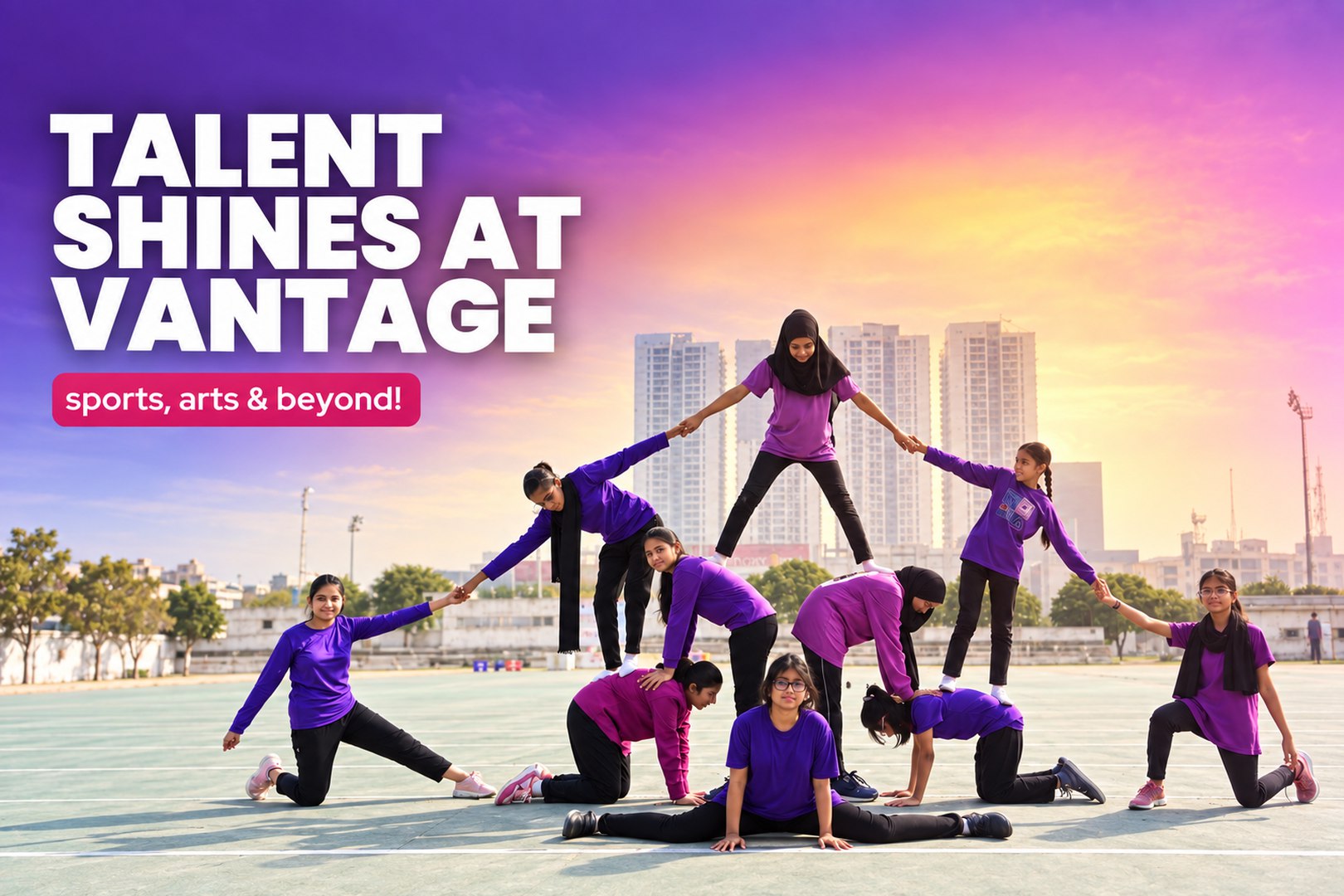
Our focus extends past curriculum objectives. Students should leave school having discovered at least one thing they did not know they were good at, and extracurricular activity is where that usually happens.
Students take part in a range of activities during their time with us, including debate, science and art clubs, drama, self development programmes, and physical sport such as basketball, badminton and taekwondo, alongside robotics and mental mathematics.
Languages sit alongside this. French and Arabic are taught through the Online School, and students at our chapters take them that way.
The best way to judge a school is to walk through it while it is working. Book a visit and meet the people who would be teaching your child.